
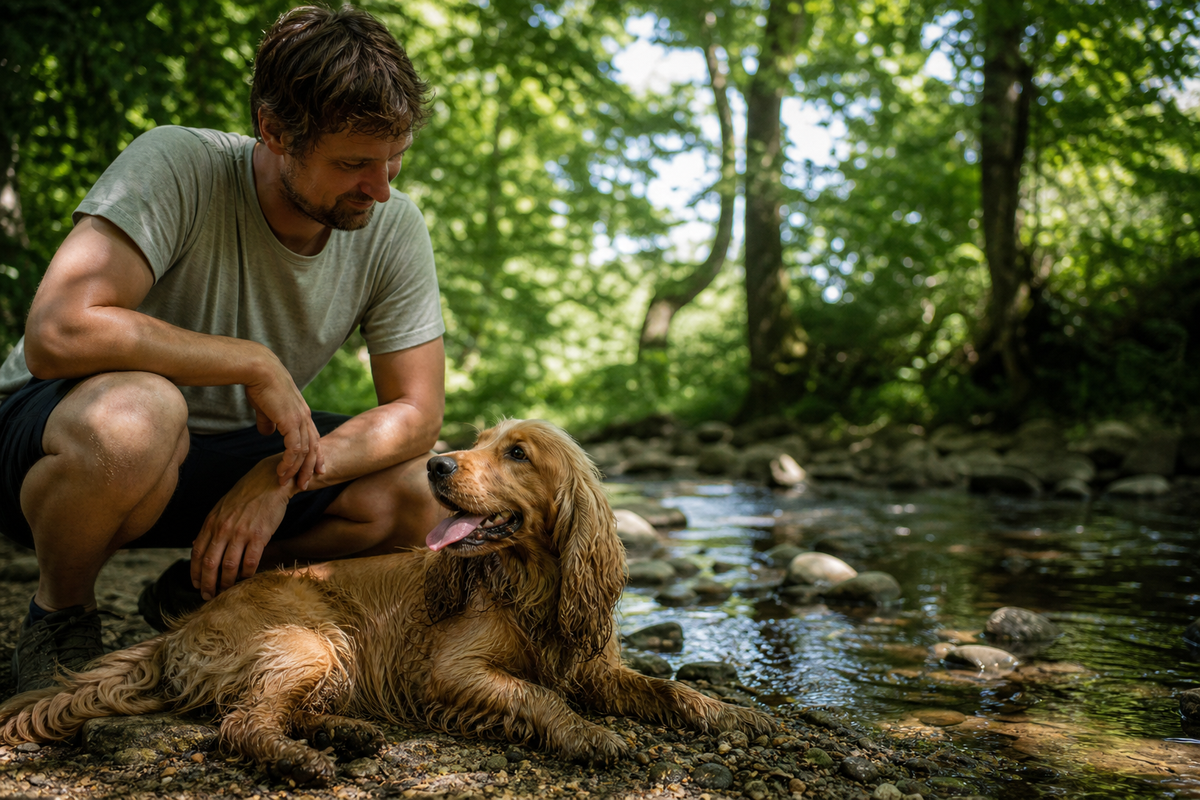
There is no single amount of water that suits every dog on every walk. A dog’s needs change with body size, age, health, diet, temperature, humidity, pace and length of exercise. The practical answer is to carry enough fresh water for the planned outing, offer it regularly and watch your individual dog rather than waiting until they appear exhausted.
What changes how much water a dog needs?
| Factor | Why it matters on a walk |
|---|---|
| Weather | Warm, humid or sunny conditions increase the need for cooling breaks and water. |
| Exercise | A fast, hilly or long route is more demanding than a short, gentle stroll. |
| Dog size and coat | Larger dogs and dogs with dense coats may heat up differently from small or lightly coated dogs. |
| Age and health | Puppies, older dogs and dogs with medical conditions may need a more cautious plan. |
| Food | Dogs eating mainly dry food obtain less water from meals than dogs eating wet food. |
If a vet has advised a specific water or exercise routine for your dog, follow that advice over any general guide.
Before the walk
- Check the forecast as well as the current temperature.
- Choose a cooler time and a shaded route in warm weather.
- Let your dog have access to fresh water before leaving.
- Carry your own clean supply rather than relying on finding a tap or stream.
- Plan a shorter route if the conditions are warmer than expected.
PDSA advises owners to take plenty of water on summer walks and to exercise dogs during cooler parts of the day. Read PDSA’s exercise guidance.
During the walk: small, sensible opportunities
Offer fresh water at regular breaks, particularly after an energetic section. Let your dog drink calmly rather than encouraging them to gulp a very large amount immediately after hard exercise. Pause in shade and allow breathing to settle before continuing.
Do not assume that ponds, puddles or streams are suitable drinking sources. Water can contain pollution, parasites, salt or seasonal hazards. Carrying a known clean supply gives you more control over what your dog drinks.
Signs that the plan needs to change
Slow down, move to shade and offer water if your dog is panting more heavily than expected, repeatedly seeking shade, lagging behind or reluctant to continue. On a hot day, the safest decision may be to end the walk early.
Heavy panting that does not settle, weakness, confusion, vomiting, collapse or loss of coordination can indicate a serious heat-related problem. Move the dog to a cooler place and contact a vet urgently. The RSPCA advises preparing water and shade and avoiding walks during the hottest periods. See the RSPCA’s hot-weather walking advice.
After the walk
- Make fresh water available at home.
- Let your dog settle somewhere cool and ventilated.
- Clean any reusable drinking surfaces before the next outing.
- Review whether the route, pace and amount carried were appropriate.
How much should you carry?
Work backwards from the route. Consider how long you expect to be away, whether fresh water will genuinely be available and how much you may need for delays, spills or a change in weather. For a longer day out, carrying a little more than the expected minimum is usually more useful than rationing a small supply.
The size of the container should suit the dog and the outing. A large dog on a long summer walk needs a different plan from a small dog on a brief winter stroll. What matters is having enough fresh water and a practical way for your dog to drink it.
A simple hydration checklist
- Fresh water packed
- Clean drinking surface available
- Shaded breaks planned
- Weather and route checked
- Extra water allowed for delays
- Dog monitored throughout the walk
Prepare for longer outings
Browse Novara’s Dog Travel Bottles & Hydration collection for portable options that keep water and feeding bowls together. Product capacity should always be matched to your dog and planned route.

Leave a comment
This site is protected by hCaptcha and the hCaptcha Privacy Policy and Terms of Service apply.