
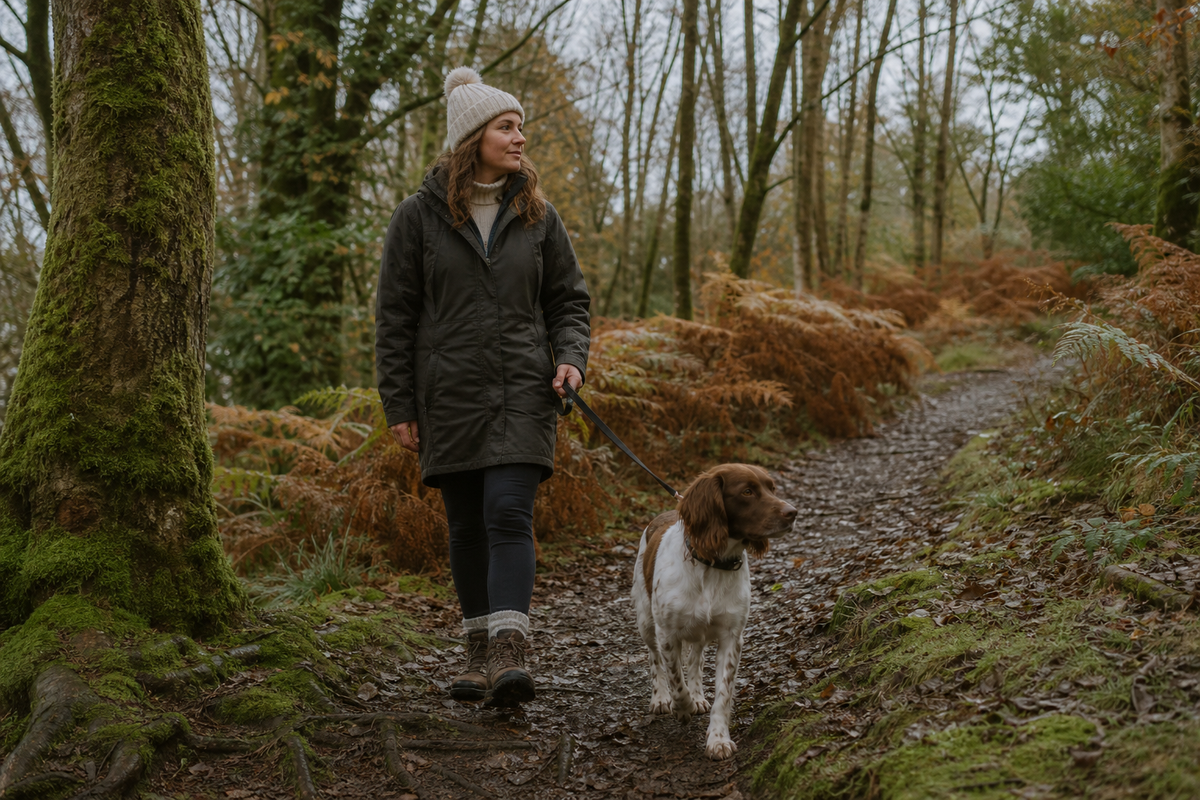
Bungee dog leads can be useful for dogs that pull suddenly, but they are not a complete loose-lead training solution. The elasticated section can soften a sharp change in tension, making some walks feel less abrupt for both dog and handler. It does not teach a dog where to walk, and it cannot replace appropriate training, good handling or correctly fitted equipment.
How does a bungee dog lead work?
A bungee lead contains an elasticated section that stretches under tension. Instead of the lead becoming fully taut at once, part of the movement is absorbed progressively. This can make a sudden lunge or change of direction feel less jarring than it would on a completely rigid lead.
Think of it as tension management—not a cure for pulling.
Potential benefits on everyday walks
- A softer response to sudden movement: useful when a dog changes pace unexpectedly.
- More comfortable handling: padded handles can reduce pressure on the hand during normal use.
- Extra close-control option: a second traffic handle can help when passing a road, gate or crowded area.
- Room for a natural stride: the longer working length can suit open paths when it is safe to give more space.
What a bungee lead will not do
It will not automatically stop pulling. In fact, a dog that constantly reaches the end of any lead may learn that forward pressure is part of walking unless the handler also works on loose-lead skills. If pulling is strong, persistent or difficult to manage, seek advice from a suitably qualified, reward-based dog trainer.
A bungee lead also does not make every situation safer. The extra movement can be unsuitable beside traffic, around livestock or in tightly crowded places unless the handler uses a close-control handle and remains attentive.
Who may find one useful?
It may suit you if:
- Your dog occasionally lunges or changes pace rather than pulling continuously.
- You walk on open routes and want a little more give in the connection.
- You value a padded main handle and a second short handle.
- You already practise calm, loose-lead walking.
Consider another setup or professional guidance if:
- Your dog’s strength is difficult for you to control.
- Your dog reacts intensely to people, dogs, traffic or wildlife.
- You mainly walk in busy urban areas with little room.
- You need a fixed-length training lead for precise handling.
How to use a bungee lead well
- Attach it to suitable walking equipment. Check the clip, attachment point and fit before leaving home.
- Begin somewhere quiet. Learn how much the elastic section stretches before using it in a busy environment.
- Keep the main handle secure. Do not wrap the lead around your hand or fingers.
- Use the close handle deliberately. Shorten the distance before roads, gateways and other confined spaces.
- Reward a slack lead. The equipment manages tension; your training builds the walking habit.
- Inspect it regularly. Stop using it if stitching, elastic, padding or the clasp shows damage.
What about countryside walks?
The RSPCA advises keeping dogs under effective control and using a lead around livestock. Follow local signs and the Countryside Code, and choose a lead length that lets you respond promptly. Read the RSPCA’s walking guidance.
Is a bungee lead better than a standard lead?
Neither is universally better. A standard lead gives consistent fixed feedback and may be preferable for training or busy pavements. A bungee design may feel smoother during outdoor walks where occasional changes of pace are expected. The right choice depends on your dog, your handling ability and the environment—not simply the product name.
Explore the walking range
Compare the colours in Novara’s Bungee Dog Leads collection. Read the length and construction details on the product page and choose walking equipment that matches your dog’s size, behaviour and routine.

Leave a comment
This site is protected by hCaptcha and the hCaptcha Privacy Policy and Terms of Service apply.